Cooling towers are a critical component in numerous industrial processes where temperature control is decisive for operational continuity. When these systems fail, the impacts are immediate: unplanned downtime, overheating, increased equipment wear, and high maintenance costs.
At Caproin, we support the industry with comprehensive cooling tower solutions focused on improving reliability, extending equipment life, and reducing operational risks.
What are cooling towers and why are they so important?
Cooling towers are heat exchangers designed to dissipate heat from a water system into the atmosphere through the evaporation process. Hot water from the process is cooled and returned to the system, allowing stable thermal conditions to be maintained in continuous operations.
Their correct operation is key to:
In which industries are cooling towers used?
Cooling towers are present in multiple industrial sectors, including:
- Power generation (thermal and nuclear).
- Oil refineries and petrochemical plants.
- Chemical industry.
- Cement plants.
- Mining.
- Food processing.
- Pulp and paper.
- Industrial HVAC systems and large buildings.
In all these sectors, a failure in the cooling tower can compromise safety, production, and operating costs.
Most common problems in cooling towers
In the field, industries often face recurring challenges in their cooling towers, such as:
These problems directly affect system reliability and increase the total cost of operation if they are not addressed comprehensively.
Cooling Tower Types: Natural Draft and Mechanical Draft
Not all cooling towers operate the same way. Understanding the types of cooling towers is key to selecting the right solution based on process scale, energy consumption, and the operating conditions of each industry.
Generally, cooling towers are classified into natural draft and mechanical draft towers.
Natural Draft Cooling Towers
Natural draft cooling towers operate without fans or mechanical components, relying solely on natural air convection. Their operation is based on the chimney effect generated by large structures of considerable height.

While this type of tower can handle large volumes of water, it has significant limitations:
For these reasons, their use is mainly limited to thermal power plants and large-scale facilities, being uncommon in industrial applications where control, efficiency, and reliability are required.
Mechanical Draft Cooling Towers
Mechanical draft cooling towers use a fan driven by a mechanical system to control airflow. This configuration allows for greater control of the cooling process and more efficient adaptation to industrial operating conditions.
Mechanical draft is the general category and is subdivided into two main configurations:

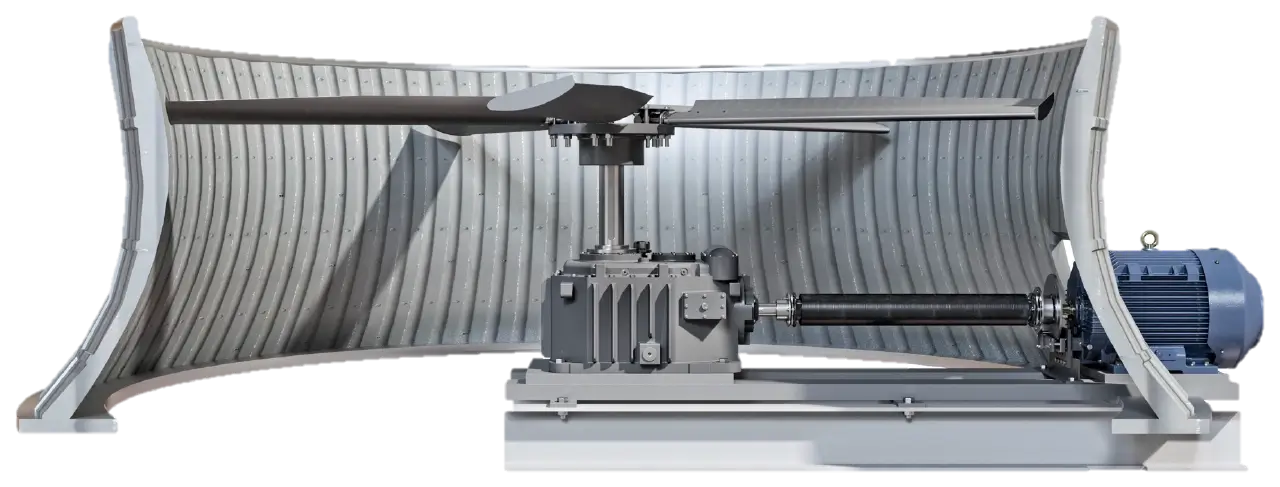
Induced draft cooling tower components
- Motor
- Driveshaft Addax
- Fan
- Falk CTA Gear reducer
- Fiberglass fan stack
- Perimeter handrail
- Fan deck
- Hot water inlet
- Corrugated casing panel
- Cold water basin
- Air inlet
- PVC film fill
- Distribution system
- Drift eliminators
[A] Regal Rexnord Drive Train: Real-world view of the motor, Addax coupling, and Falk CTA gearbox assembly, which are critical components for airflow movement.
[B] Cambridge Water Screen: Detail of the static filtration system designed to protect the cold water basin and prevent system clogs.
In this type of tower, the reliability of components such as gearboxes, couplings, fans, and power transmission systems becomes critical to ensuring operational continuity and minimizing unplanned downtime.
Comprehensive Solutions for Cooling Tower Systems
An efficient cooling tower system does not depend on a single component, but on the correct integration of the entire powertrain and system protection.
Caproin offers solutions for the complete operational assembly, including:
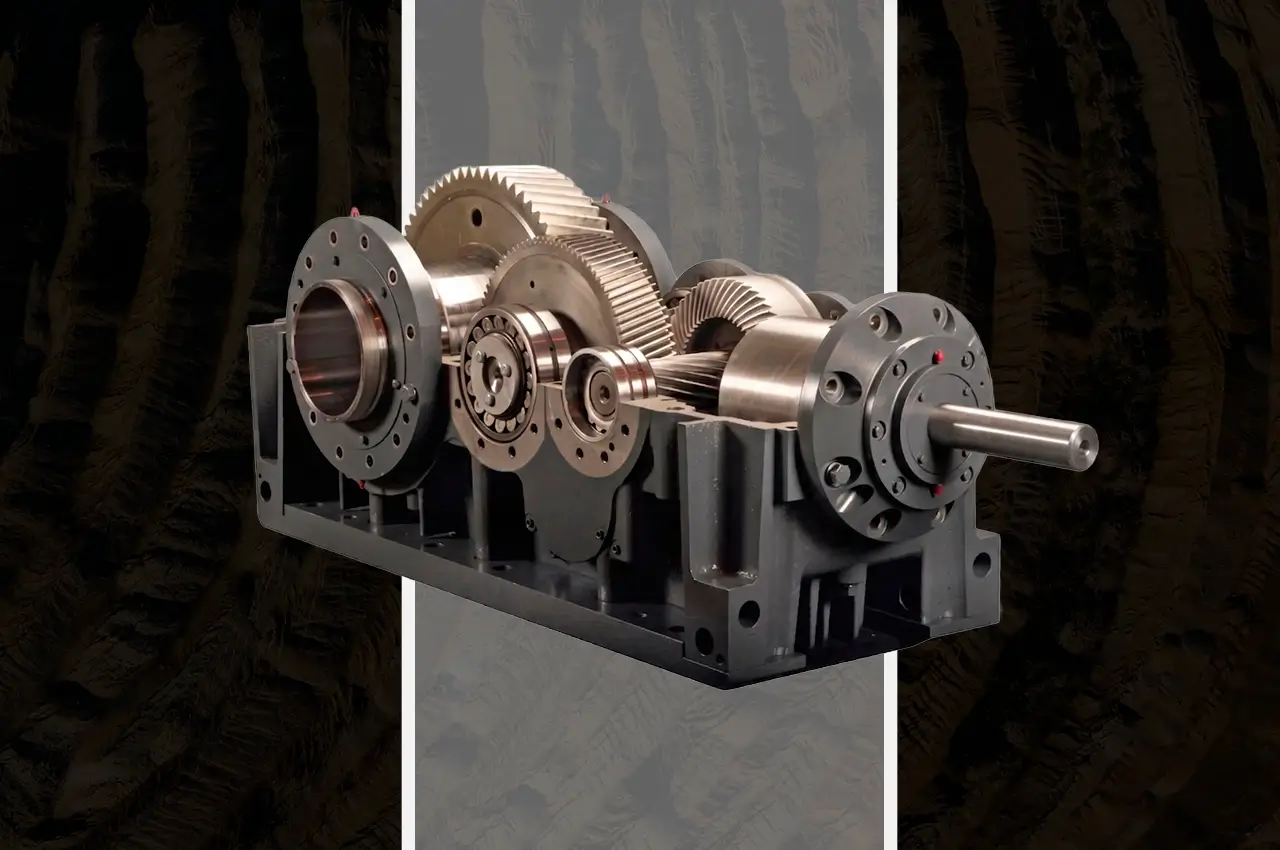
- Falk CTA Gearboxes: Specifically designed for cooling towers, featuring high load capacity and resistance in harsh environments. They are equivalent in form and configuration to the well-known Amarillo brand gearboxes.
- Addax Composite Couplings: Lightweight, corrosion-resistant, and featuring high tolerance for misalignment. Their low weight allows a single person to lift the coupling for installation, and this same characteristic reduces system energy consumption.
- Addax Cooling Tower Brakes: Allowing the fan to be stopped safely during maintenance or adverse weather conditions.
- Cambridge Water Screens (Traveling and Static): Protecting pumps and heat exchangers by preventing debris from entering the system.
- Perceptiv™ Monitoring Systems: Helping to prevent failures and optimize system performance.
This comprehensive approach reduces vibrations, minimizes unplanned downtime, and extends the service life of critical equipment.
In this section, you can learn about some of the products that are part of the complete cooling tower system, designed to operate under demanding conditions.
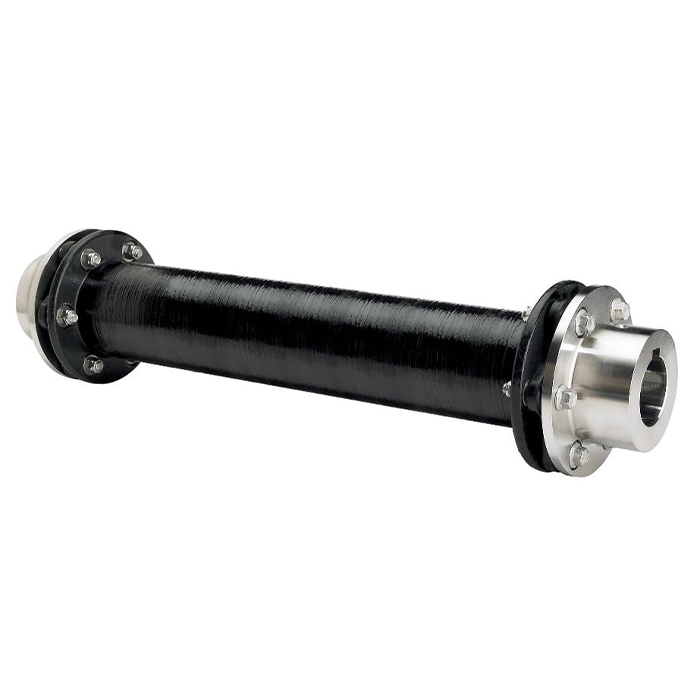
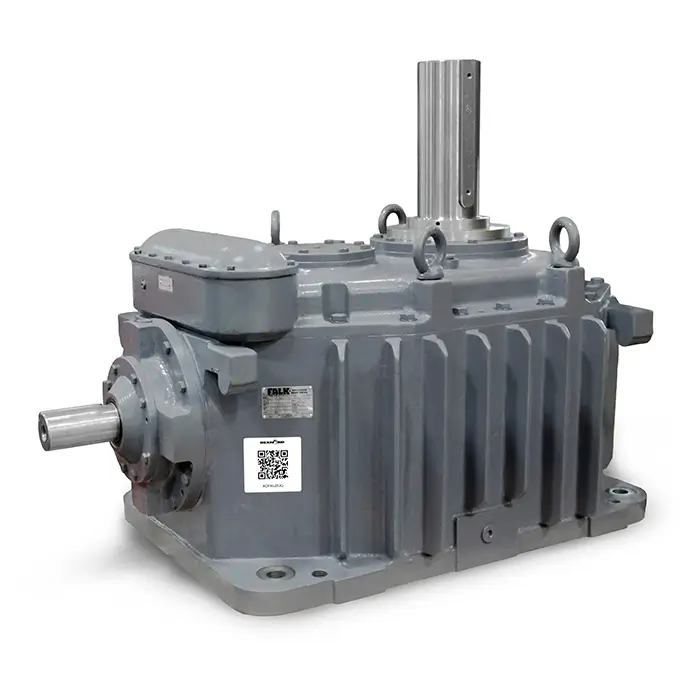

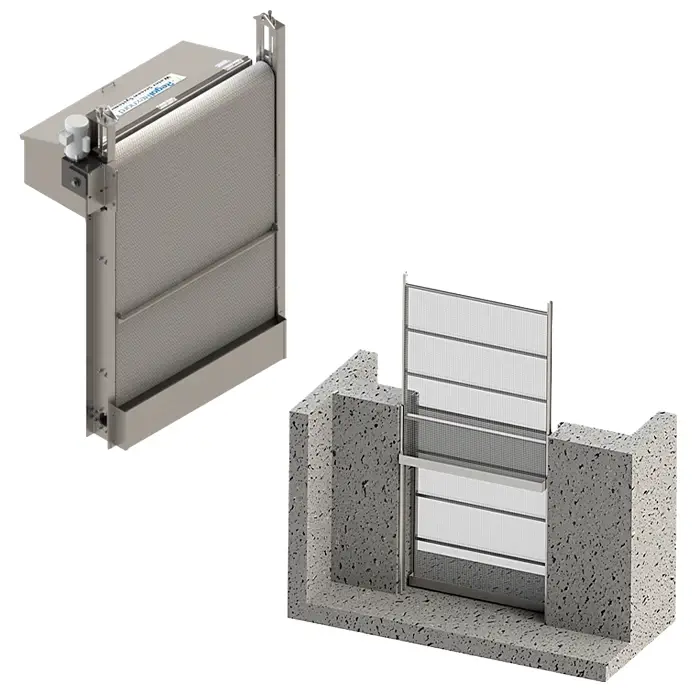
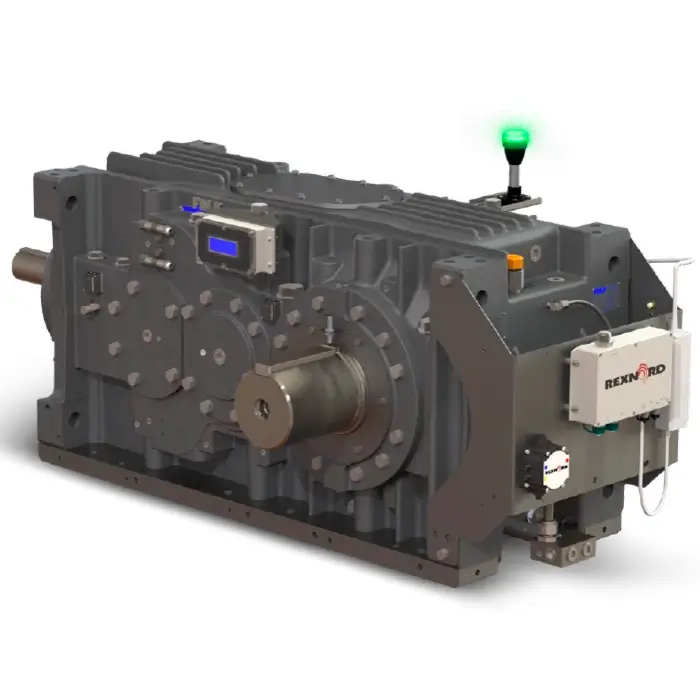
Each one plays a key role in the reliability, safety, and efficiency of the system.
A Technical Ally for Your Cooling Towers
Beyond equipment supply, at Caproin we support our clients with applied engineering, technical consultancy, and specialized support, helping them select the right solution based on their process, environment, and operating conditions.
Our goal is clear: to improve cooling tower reliability and reduce the impact of failures on industrial operations.
Need to optimize or modernize your cooling towers?
Complete the form, and our technical team will contact you to evaluate your application and offer a solution tailored to your operational needs.
At Caproin, we are ready to help you improve the efficiency, safety, and performance of your cooling towers.